China’s story is one of the longest and most influential in world history. From its beginnings as one of the world’s oldest civilizations along the Yellow River, China has risen, fallen, and risen again. Today, China stands as a global superpower, rivaling the United States in economics, technology, and geopolitics.
This journey spans millennia of dynasties, inventions, revolutions, and transformations. Understanding the rise of China offers key insights into how nations evolve and how history continues to shape our modern world.
SEO Keywords: Rise of China, Chinese history, ancient civilization, dynasties, modern China, global superpower.
—
Ancient China: Cradle of Civilization
China’s early history began with the Xia, Shang, and Zhou dynasties. By 221 BCE, the Qin Dynasty under Qin Shi Huang unified the country, standardizing currency, laws, and even building early sections of the Great Wall of China.
Ancient China gave the world many innovations: paper, gunpowder, compass, silk, and porcelain. The Silk Road connected China to the Middle East and Europe, making it a hub of trade and culture.
SEO Keywords: Qin Shi Huang, Great Wall of China, Silk Road, Chinese inventions, Xia dynasty, Zhou dynasty, Han dynasty.
—
The Imperial Era
For centuries, dynasties like the Tang, Song, Ming, and Qing ruled China. Each contributed to advances in art, philosophy, governance, and science.
Tang Dynasty (618–907): Golden age of poetry, art, and trade.
Song Dynasty (960–1279): Known for economic growth, printing technology, and gunpowder weapons.
Ming Dynasty (1368–1644): Built the Forbidden City and sent Zheng He’s voyages across the seas.
Qing Dynasty (1644–1912): Expanded China’s territory but later weakened under foreign pressure.
SEO Keywords: Tang dynasty, Song dynasty, Ming dynasty, Qing dynasty, Zheng He, Forbidden City, Chinese culture.
—
Decline in the 19th Century
The 19th century was a dark period for China. Foreign powers exploited China through unequal treaties after the Opium Wars with Britain. The Taiping Rebellion and Boxer Rebellion revealed internal weakness, while the Qing dynasty collapsed under pressure.
By 1912, the imperial system ended, and China became a republic. But years of warlords, foreign invasions, and civil war left the nation fractured.
SEO Keywords: Opium Wars, Taiping Rebellion, Boxer Rebellion, Qing collapse, Republic of China, foreign imperialism.
—
The Communist Revolution
After decades of conflict, Mao Zedong and the Chinese Communist Party (CCP) triumphed in 1949, establishing the People’s Republic of China. Land reforms, collectivization, and industrial campaigns transformed society but also caused upheaval, famine, and political purges, particularly during the Great Leap Forward and the Cultural Revolution.
Despite hardships, the revolution laid the foundation for centralized control and modernization.
SEO Keywords: Mao Zedong, Chinese Communist Party, People’s Republic of China, Great Leap Forward, Cultural Revolution.
—
Economic Transformation
In 1978, Deng Xiaoping introduced sweeping economic reforms. China shifted from a closed, centrally planned economy to a “socialist market economy.”
Special Economic Zones (SEZs) attracted foreign investment.
Agriculture was decentralized, boosting food production.
Manufacturing and exports turned China into the “world’s factory.”
These reforms triggered unprecedented growth, lifting hundreds of millions out of poverty.
SEO Keywords: Deng Xiaoping, economic reforms China, socialist market economy, Special Economic Zones, China’s manufacturing.
—
China in the 21st Century
Today, China is the world’s second-largest economy and a rising geopolitical giant.
Technology: Companies like Huawei, Tencent, and Alibaba are global leaders.
Infrastructure: Projects like Belt and Road Initiative (BRI) expand China’s influence worldwide.
Military: Modernization of the People’s Liberation Army (PLA) challenges U.S. dominance in Asia.
Global politics: China is a permanent member of the UN Security Council and plays a central role in climate agreements, trade, and diplomacy.
SEO Keywords: Belt and Road Initiative, Huawei, Alibaba, Chinese economy, PLA modernization, global politics China.
—
Challenges Facing China
Despite its rise, China faces significant challenges:
Demographics: An aging population threatens long-term growth.
Environment: Pollution and resource scarcity.
Global rivalry: Growing tensions with the United States over trade, technology, and the South China Sea.
Internal issues: Demands for greater freedoms, minority rights, and economic stability.
SEO Keywords: China challenges, aging population, U.S.-China rivalry, South China Sea, environmental crisis China.
—
Conclusion
The rise of China is a story that spans thousands of years—from ancient dynasties to modern skyscrapers. Today, China stands as both a global power and a nation still grappling with immense challenges.
Its journey reflects resilience, adaptation, and ambition. As China continues to rise, its role in shaping the future of global politics, economics, and culture is undeniable.
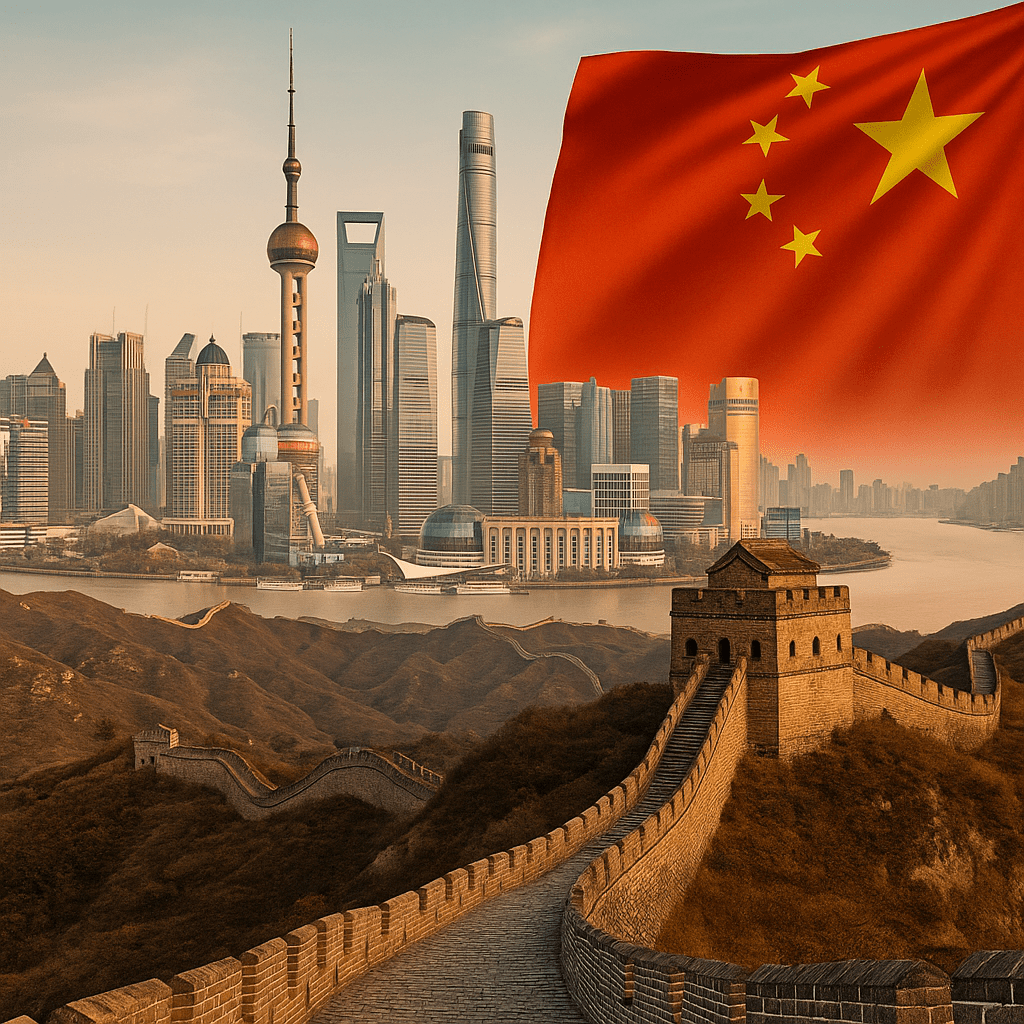
The Rise of China: From Ancient Civilization to Global Superpower
From ancient dynasties to modern skyscrapers, China’s rise to global superpower is a story of resilience, innovation, and transformation that shaped world history.
3–5 minutes
Alibaba, Ancient China, Belt and Road Initiative, Chinese Communist Party, Chinese economy, Deng Xiaoping reforms, global superpower, Huawei, Mao Zedong, Ming dynasty, Opium Wars, People’s Republic of China, PLA modernization, Qin Shi Huang, Qing dynasty, Rise of China, Silk Road, Song dynasty, Tang dynasty, U.S.-China rivalry



Leave a Reply