Germany’s rise from a patchwork of fragmented states in the Middle Ages to a modern economic and political powerhouse is one of the most fascinating stories in European history. From the days of the Holy Roman Empire to the unification under Otto von Bismarck, from the devastation of two world wars to the miracle of postwar recovery, Germany’s journey has been marked by ambition, tragedy, and resilience.
Today, Germany stands as the largest economy in Europe, a leader in technology, industry, and diplomacy. Understanding its rise helps explain much of Europe’s modern history and the balance of global power.
SEO Keywords: Rise of Germany, German history, Holy Roman Empire, German unification, Otto von Bismarck, modern Germany, European power.
—
Germany in the Middle Ages
For centuries, the region we now call Germany was divided into numerous duchies, principalities, and free cities under the umbrella of the Holy Roman Empire (962–1806). Though decentralized, the empire was a major cultural and political force.
The Middle Ages saw the rise of German universities, Gothic architecture, and figures like Martin Luther, whose Protestant Reformation (1517) transformed religion in Europe.
SEO Keywords: Holy Roman Empire, Martin Luther, Protestant Reformation, German states, medieval Germany.
—
The Napoleonic Era and German Nationalism
The Napoleonic Wars (1792–1815) reshaped Europe. Napoleon dissolved the Holy Roman Empire in 1806, reorganizing Germany into the Confederation of the Rhine. His defeat gave rise to a surge of German nationalism, as intellectuals and leaders called for unity.
The Congress of Vienna (1815) established the German Confederation, but real unification was still decades away.
SEO Keywords: Napoleonic Wars Germany, Confederation of the Rhine, German nationalism, Congress of Vienna, German Confederation.
—
Unification Under Bismarck
The mid-19th century brought dramatic change. Under the leadership of Otto von Bismarck, Chancellor of Prussia, Germany was unified through a series of wars:
Danish War (1864): Prussia and Austria defeated Denmark.
Austro-Prussian War (1866): Prussia expelled Austria from German affairs.
Franco-Prussian War (1870–1871): A stunning victory over France led to the proclamation of the German Empire in 1871, with King Wilhelm I as Kaiser.
This new empire quickly became a major industrial and military power in Europe.
SEO Keywords: Otto von Bismarck, German unification, Franco-Prussian War, German Empire 1871, Kaiser Wilhelm I, Prussia.
—
Imperial Germany and World War I
By the early 20th century, Germany was Europe’s leading industrial nation. However, ambitions for colonies and naval supremacy brought it into conflict with Britain and France.
The assassination of Archduke Franz Ferdinand in 1914 triggered World War I, with Germany at the center of the conflict. Despite early victories, Germany was defeated in 1918. The Treaty of Versailles (1919) imposed harsh reparations and territorial losses, leaving Germany humiliated.
SEO Keywords: Imperial Germany, World War I, Treaty of Versailles, German defeat, reparations, Weimar Republic.
—
The Rise and Fall of Nazi Germany
Economic crisis and resentment after WWI paved the way for Adolf Hitler and the Nazi Party. Promising to restore German pride, Hitler established a totalitarian regime.
World War II (1939–1945): Germany invaded Poland, launching the deadliest war in history.
Nazi ideology brought catastrophic consequences, including the Holocaust, where six million Jews were murdered.
By 1945, Germany was in ruins after its defeat by the Allies.
SEO Keywords: Adolf Hitler, Nazi Germany, World War II, Holocaust, German defeat 1945, Nazi regime.
—
Division and the Cold War
After WWII, Germany was divided into West Germany (Federal Republic of Germany) and East Germany (German Democratic Republic).
West Germany, supported by the U.S. and allies, rebuilt through the Marshall Plan, becoming a capitalist democracy.
East Germany fell under Soviet control, adopting communism.
The Berlin Wall (1961–1989) became the ultimate symbol of division during the Cold War.
SEO Keywords: West Germany, East Germany, Berlin Wall, Marshall Plan, Cold War Germany, German division.
—
Reunification and Modern Germany
The fall of the Berlin Wall in 1989 and the collapse of the Soviet Union led to the reunification of Germany in 1990. Since then, Germany has reemerged as a central power in Europe.
It became the driving force of the European Union (EU).
Its economy, driven by industry, exports, and technology, is one of the strongest globally.
Leaders like Angela Merkel shaped Germany’s role in international diplomacy, climate policy, and EU integration.
SEO Keywords: German reunification, Berlin Wall fall, European Union, Angela Merkel, German economy, modern Germany.
—
Challenges and the Future
Despite its strength, modern Germany faces challenges:
Demographic decline and an aging population.
Energy transition and reliance on imports.
Geopolitical pressures from Russia, China, and shifting U.S. alliances.
Debates over migration, identity, and integration.
Still, Germany’s stability, innovation, and diplomacy ensure it remains a cornerstone of Europe.
SEO Keywords: German challenges, aging population Germany, energy transition, migration Germany, modern European politics.
—
Conclusion
From fragmented medieval states to a modern superpower, Germany’s rise has been marked by triumphs and tragedies. Its history reflects the volatility of Europe but also the resilience of nations to rebuild and redefine themselves.
Today, Germany stands as a leader in economics, diplomacy, and culture—a nation whose journey from division to unity mirrors the broader story of Europe itself.
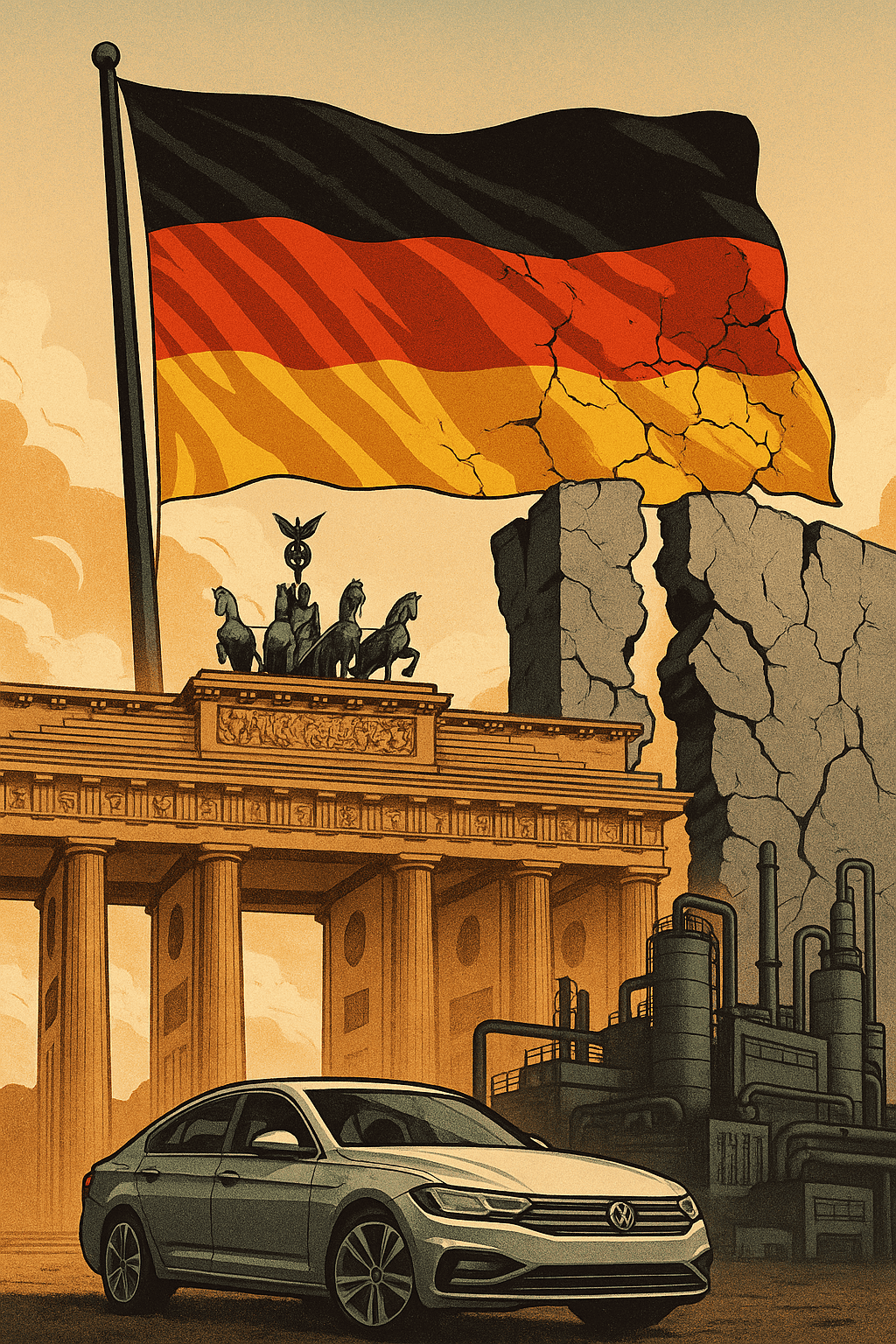
The Rise of Germany: From Fragmented States to a Modern Power
From fragmented states to a modern superpower, Germany’s rise spans unification, world wars, division, and reunification. Discover how Germany shaped Europe.
3–5 minutes
Adolf Hitler, Angela Merkel, Berlin Wall, Cold War Germany, European Union, German Empire, German history, German nationalism, German reunification, German unification, Holocaust, Holy Roman Empire, Martin Luther, Modern Germany, Nazi Germany, Otto von Bismarck, Rise of Germany, Treaty of Versailles, World War I, World War II


Leave a Reply