India’s story is one of the richest and most diverse in world history. From the Indus Valley Civilization to the rise of powerful empires, through centuries of colonial rule, and finally to independence and democracy, India has transformed into one of the world’s largest and most dynamic nations. Today, India is a global economic and cultural power, balancing its ancient traditions with modern ambitions.
SEO Keywords: Rise of India, Indian history, Indus Valley, Mughal Empire, British Raj, modern India, Indian democracy.
—
Ancient India: Cradle of Civilization
India’s roots go back over 5,000 years to the Indus Valley Civilization (c. 2600–1900 BCE), one of the world’s earliest urban cultures. Cities like Harappa and Mohenjo-Daro featured advanced urban planning, drainage, and trade networks.
Later, the Vedic period (1500–500 BCE) introduced Hinduism’s earliest texts, the Vedas, shaping Indian philosophy and society.
SEO Keywords: Indus Valley Civilization, Harappa, Mohenjo-Daro, Vedic period, Hinduism origins, ancient India.
—
Classical Empires
India saw the rise of powerful empires:
Maurya Empire (321–185 BCE): Under Ashoka the Great, India expanded widely, spreading Buddhism across Asia.
Gupta Empire (320–550 CE): A golden age of science, mathematics, art, and literature. Concepts like zero and advanced astronomy emerged.
These empires established India as a center of culture and learning.
SEO Keywords: Maurya Empire, Ashoka the Great, Gupta Empire, Indian golden age, Buddhism spread, mathematics India.
—
Medieval India and the Mughals
The medieval era saw invasions and the blending of cultures:
Delhi Sultanate (1206–1526): Introduced Islamic architecture and institutions.
Mughal Empire (1526–1857): Founded by Babur, it became one of the world’s most powerful empires. Akbar the Great promoted religious tolerance, while Shah Jahan built the Taj Mahal, a symbol of India.
SEO Keywords: Delhi Sultanate, Mughal Empire, Akbar the Great, Taj Mahal, Islamic architecture, Babur.
—
Colonial Rule: The British Raj
By the 18th century, the declining Mughal Empire gave way to European influence. The British East India Company gained control after the Battle of Plassey (1757). Following the Rebellion of 1857, Britain imposed direct rule, creating the British Raj (1858–1947).
While railways, schools, and legal systems modernized India, exploitation, famines, and racial inequality fueled resentment.
SEO Keywords: British Raj, East India Company, Battle of Plassey, Rebellion of 1857, colonial India, British rule.
—
The Struggle for Independence
The 20th century saw the rise of a powerful independence movement:
Mahatma Gandhi’s nonviolent resistance inspired millions.
Leaders like Jawaharlal Nehru and Subhas Chandra Bose rallied Indians for freedom.
In 1947, India achieved independence, but partition divided it into India and Pakistan.
SEO Keywords: Mahatma Gandhi, Indian independence, Jawaharlal Nehru, Subhas Chandra Bose, partition India, 1947 independence.
—
Independent India: Democracy and Growth
India became the world’s largest democracy, guided by a new constitution in 1950. Under Nehru’s leadership, India emphasized secularism, democracy, and economic planning.
Key milestones:
Green Revolution (1960s): Boosted food production.
Economic liberalization (1991): Opened India’s markets, sparking rapid growth.
Technological boom: India became a leader in IT and software services.
SEO Keywords: Indian democracy, Nehru, Indian Constitution, Green Revolution, economic liberalization 1991, Indian IT industry.
—
Modern India: Global Power
Today, India is a rising global power:
Economy: Among the world’s fastest-growing economies.
Technology: A hub for innovation and startups.
Culture: Bollywood, yoga, and cuisine influence the world.
Geopolitics: A key player in BRICS, the UN, and regional diplomacy.
SEO Keywords: modern India, Indian economy, Bollywood, yoga, Indian culture, BRICS, Indian geopolitics.
—
Challenges Facing India
Despite progress, India faces challenges:
Population pressure: Over 1.4 billion people strain resources.
Inequality: Poverty and wealth gaps remain.
Environment: Pollution and climate change.
Social tensions: Religion, caste, and regional divides.
SEO Keywords: Indian challenges, population India, poverty India, climate change India, social tensions India.
—
Conclusion
The rise of India from ancient civilizations to a modern democracy is a story of endurance and transformation. With its rich culture, strong democracy, and booming economy, India is set to play a central role in shaping the 21st century.
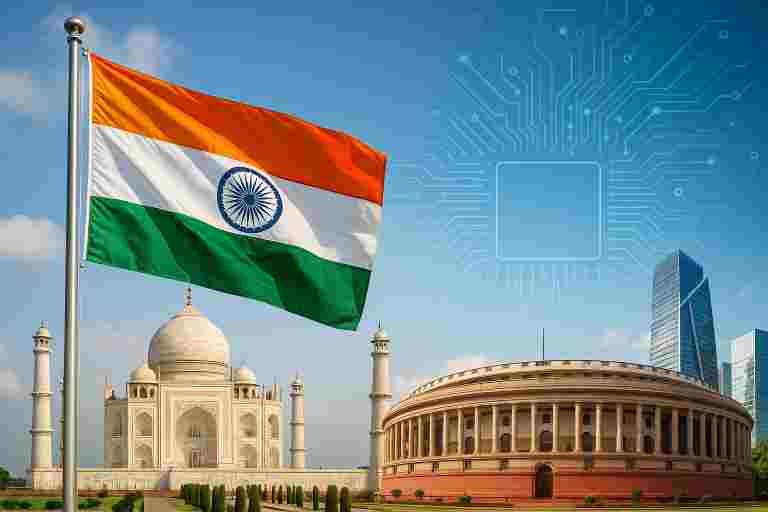
The Rise of India: From Ancient Civilization to Modern Democracy
From the Indus Valley to independence and modern democracy, India’s rise shaped global history. Discover how India became a cultural and economic superpower.
3–4 minutes
Ancient India, Ashoka, Bollywood, British Raj, economic liberalization 1991, Global power, Green Revolution, Gupta Empire, Harappa, Indian democracy, Indian economy, Indian independence 1947, Indus Valley Civilization, Mahatma Gandhi, Maurya Empire, modern India, Mughal Empire, Nehru, Rise of India, yoga


Leave a Reply