The Viking Age in Ireland (c. 795–1014 AD) was one of the most transformative periods in the island’s early medieval history. From their first sudden raids on monasteries to their settlement in coastal towns like Dublin, Limerick, and Waterford, the Norse fundamentally altered Ireland’s political, military, and cultural trajectory. While the Vikings are remembered as fierce warriors who pillaged churches and monasteries, they were also settlers, traders, shipbuilders, and cultural contributors who left an indelible mark on Ireland.
This article traces the entire arc of Viking activity in Ireland—from the early lightning raids, to the establishment of longphorts (fortified camps), to the rise of Norse-Irish hybrid kingdoms, and finally to their defeat at the legendary Battle of Clontarf (1014).
SEO Keywords: Viking Age in Ireland, Norse settlers, Viking raids Ireland, Dublin Vikings, Irish monasteries, Norse-Gaelic kingdoms.
—
Ireland Before the Vikings
In the centuries before the Vikings arrived, Ireland was a patchwork of tuatha (kingdoms) ruled by local kings. Power was decentralized, with occasional dominance by a High King at Tara. Monasteries were not only religious centers but also hubs of learning, wealth, and political power.
This decentralized political structure, combined with the enormous wealth stored in monasteries, made Ireland vulnerable to fast-moving Viking raiders.
SEO Keywords: pre-Viking Ireland, Irish monasteries, tuatha, High King of Tara.
—
The First Raids (795 AD onwards)
The Viking Age in Ireland began in 795 AD, when raiders attacked the monastery on Lambay Island near Dublin and Iona in Scotland. These early expeditions targeted coastal monasteries such as Armagh, Glendalough, and Kells, stealing relics, manuscripts, and gold.
For decades, the Norse remained seasonal raiders, arriving in summer and returning to Scandinavia in winter. These attacks shocked Irish society, disrupting religious life and challenging traditional kingship.
SEO Keywords: Viking raids 795, Lambay Island, Iona, Armagh monastery, Glendalough Viking raid.
—
From Raiders to Settlers: The Longphorts
By the mid-9th century, Vikings shifted from quick-hit raids to permanent settlements. They established longphorts—fortified ship camps—along Ireland’s rivers and coasts. These bases allowed them to overwinter in Ireland and launch deeper raids inland.
Famous longphorts included:
Dublin (founded 841): Became the most important Viking kingdom in Ireland.
Limerick: A major Viking base in the southwest.
Waterford, Wexford, Cork: Grew from Norse settlements into lasting towns.
These towns became centers of trade, connecting Ireland with the wider Viking world stretching from Scandinavia to Byzantium.
SEO Keywords: longphort, Viking Dublin, Waterford Vikings, Viking towns Ireland, Norse trading posts.
—
Norse Kings and Dynasties
By the late 9th and 10th centuries, Viking leaders in Ireland established dynasties that rivaled native Irish kings.
Olaf the White (9th c.): First king of Dublin, linked to both Ireland and Scotland.
Sigtrygg Caech (“Silkenbeard”): Ruled Dublin in the 10th–11th century, a patron of churches and an ally/enemy of Irish kings at different times.
Ivar the Boneless (possibly linked): Associated with Norse activity across Britain and Ireland.
These rulers balanced war, trade, and diplomacy, often intermarrying with Irish royal families to secure alliances.
SEO Keywords: Viking kings Dublin, Olaf the White, Sigtrygg Silkenbeard, Ivar the Boneless, Norse dynasties Ireland.
—
Conflict and Cooperation with the Irish
The relationship between Vikings and Irish kingdoms was complex. While early years were dominated by raids, by the 10th century alliances were common. Norse kings allied with Irish rulers against rivals, and Norse warriors fought both for and against Irish lords.
Trade also flourished:
Vikings brought silver, textiles, and slaves.
Irish monasteries provided manuscripts, religious goods, and agricultural products.
Intermarriage created the Norse-Gaelic identity, blending languages, cultures, and traditions.
SEO Keywords: Viking-Irish alliances, Norse-Gaelic identity, Viking trade Ireland, slave trade Dublin.
—
Warfare and Military Innovation
Vikings were feared for their longships, which allowed rapid strikes along rivers and coasts. They introduced new weapons and tactics:
Axes, swords, and round shields.
Naval battles on Irish rivers.
Construction of fortified ringforts and towns that changed Ireland’s military geography.
Irish kings adapted by building better defenses and copying Viking strategies, leading to a military revolution in Ireland.
SEO Keywords: Viking warfare Ireland, longships, Viking weapons, Norse tactics, Irish defenses.
—
The Battle of Clontarf (1014)
The climax of the Viking Age in Ireland came at the Battle of Clontarf (April 23, 1014). High King Brian Boru of Munster faced an alliance of Dublin Vikings, Leinster rebels, and Norsemen from abroad.
The battle was fierce and bloody, with thousands killed. The Irish forces under Brian ultimately claimed victory, but Brian himself was slain, along with many leaders on both sides.
While Clontarf did not end Viking presence in Ireland, it broke their political power. Norse towns like Dublin remained important, but now under Irish dominance.
SEO Keywords: Battle of Clontarf 1014, Brian Boru, Dublin Vikings, Leinster rebellion, Norse defeat Ireland.
—
Everyday Life in Norse Ireland
Not all Viking influence was war and raiding. The Norse transformed Irish society in other ways:
Urbanization: Towns like Dublin and Waterford became Ireland’s first true cities.
Coinage: Vikings introduced silver coins to Ireland.
Craftsmanship: Jewelry, ships, and tools reflected Norse artistry.
Religion: While pagan at first, many Vikings converted to Christianity by the 10th century.
This blending of Norse and Gaelic culture created a unique hybrid civilization.
SEO Keywords: Viking towns Ireland, Dublin coinage, Norse crafts, Norse Christianity Ireland.
—
The End of the Viking Age in Ireland
By the mid-11th century, Viking political power in Ireland waned. Dublin remained a major town, but Irish kings increasingly dominated it. The arrival of the Normans in 1169 further absorbed Norse settlements into broader European dynamics.
Yet the Norse legacy endured in Ireland’s urban centers, language, and genetics. Many Irish families today carry Norse ancestry, and cities like Dublin still show their Viking roots.
SEO Keywords: end Viking Age Ireland, Norman invasion 1169, Norse legacy Dublin, Viking heritage Ireland.
—
Legacy of the Viking Age in Ireland
The Viking Age in Ireland left deep and lasting legacies:
1. Urban Foundations: Dublin, Waterford, Cork, Limerick, and Wexford began as Viking towns.
2. Cultural Fusion: Norse-Gaelic culture blended art, language, and traditions.
3. Political Change: Viking warfare reshaped Irish kingship and alliances.
4. Global Connections: Ireland became tied into a vast Viking trade network stretching from North America to Byzantium.
SEO Keywords: Norse legacy Ireland, Viking towns Dublin, Norse-Gaelic fusion, Viking trade networks, Irish history Vikings.
—
Conclusion
The Viking Age in Ireland was an era of violence, innovation, and transformation. Norse settlers and warriors raided monasteries, built towns, fought battles, and intermarried with the Irish, forever altering the island’s history.
Though often remembered as fierce invaders, the Vikings were also builders, traders, and cultural contributors whose legacy still lives on in Ireland’s cities and identity today.
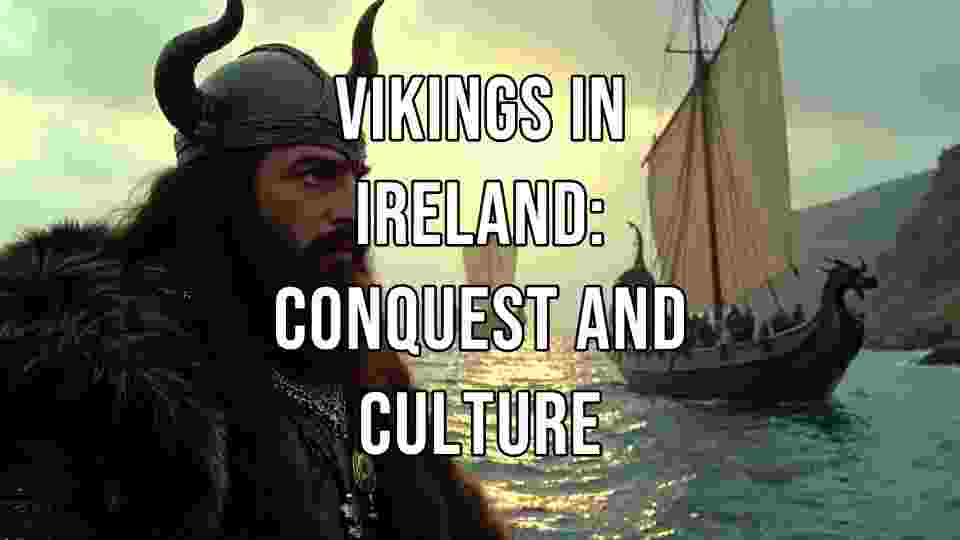
The Viking Age in Ireland: Norse Settlers and Fierce Warriors
The Viking Age in Ireland (795–1014) brought fierce raids, Norse settlements, and cultural fusion. Discover how Vikings shaped Dublin, battles like Clontarf, and Irish history.


Leave a Reply