The Norman Conquest of England in 1066 is one of the most transformative events in European history. Marked by the Battle of Hastings, where Duke William of Normandy defeated King Harold Godwinson, the conquest reshaped England’s political system, culture, language, and identity.
It was not simply a change of rulers; it was a seismic shift that integrated England into the wider European world, altering its laws, architecture, governance, and even the words people spoke. The Norman Conquest stands as both a military triumph and a social revolution, leaving a legacy that endures nearly a thousand years later.
—
Part I: The Background to Conquest
England Before 1066
In the early 11th century, England was a powerful kingdom, ruled by the Anglo-Saxons. King Edward the Confessor, who died in January 1066, left no direct heir. His death sparked a succession crisis.
The Claimants to the Throne
1. Harold Godwinson – Earl of Wessex, chosen by the English nobility and crowned king.
2. William, Duke of Normandy – Claimed that Edward had promised him the crown years earlier.
3. Harald Hardrada of Norway – Asserted a claim based on old Viking treaties.
This dispute set the stage for one of history’s most famous invasions.
—
Part II: The Road to Hastings
The Invasion of Harald Hardrada
In September 1066, Harald Hardrada invaded northern England with a Viking army. King Harold Godwinson marched north and defeated him at the Battle of Stamford Bridge—a victory that exhausted his troops just as William of Normandy prepared to land.
William’s Invasion
William crossed the English Channel with a fleet of around 700 ships and thousands of knights, archers, and infantry. His army represented the latest in medieval military organization, blending cavalry and disciplined infantry.
—
Part III: The Battle of Hastings (14 October 1066)
The English Army
Around 7,000 men, mostly infantry armed with axes and shields.
Formed a strong defensive shield wall on Senlac Hill.
The Norman Army
Around 7,000 men as well, including cavalry, infantry, and archers.
William’s knights gave him a tactical advantage over Harold’s foot soldiers.
The Clash
The battle lasted all day:
Norman cavalry repeatedly attacked the English shield wall but were repelled.
A feigned retreat tricked parts of Harold’s army into breaking formation.
William seized the moment, counterattacking with cavalry and archers.
King Harold was killed—legend says by an arrow to the eye—ending Anglo-Saxon resistance.
The victory gave William control of England.
—
Part IV: Establishing Norman Rule
The Harrying of the North
Resistance continued after Hastings. William brutally suppressed revolts, most infamously in the Harrying of the North (1069–70), devastating entire regions to prevent rebellion.
Castles and Control
The Normans introduced stone castles—motte-and-bailey structures—across England. These became symbols of power and tools of military dominance.
The Feudal System
William redistributed land to his Norman followers, replacing the Anglo-Saxon aristocracy. England became tied into a broader feudal system linking it to France.
—
Part V: Cultural Transformation
Language and Law
Norman French became the language of the court, law, and nobility.
Anglo-Saxon Old English blended with French, creating Middle English.
Legal systems were reshaped under Norman influence, laying groundwork for English common law.
Architecture and Religion
Massive Romanesque cathedrals and castles transformed the English landscape.
The Church was reorganized under Norman bishops loyal to William.
—
Part VI: The Domesday Book
In 1086, William ordered a vast survey of his kingdom known as the Domesday Book.
It recorded land ownership, resources, and taxation.
It remains one of the most remarkable administrative achievements of the medieval world.
—
Part VII: Legacy of the Norman Conquest
Political Impact
England became closely tied to continental Europe, particularly France.
The monarchy gained strength, reducing the independence of local lords.
Cultural Legacy
English identity was reshaped, blending Anglo-Saxon and Norman traditions.
The English language itself absorbed thousands of French words.
Historical Memory
Agincourt and Waterloo may be great victories, but Hastings is remembered as the defining defeat that remade England. William became known as William the Conqueror, a title that still echoes power.
—
Conclusion
The Norman Conquest was more than a change of rulers—it was the transformation of a nation. Through military strength, administrative innovation, and cultural integration, William and his successors laid the foundations of medieval and modern England.
Its legacy remains visible in England’s castles, cathedrals, legal system, and language. The conquest of 1066 truly was a turning point in history, a legacy of power and transformation.
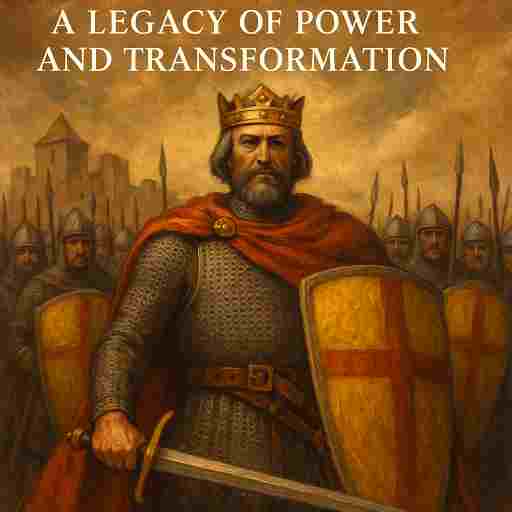
The Norman Conquest: A Legacy of Power and Transformation
The Norman Conquest of 1066 transformed England forever. Discover how William the Conqueror’s victory at Hastings reshaped politics, culture, language, and law.




Leave a Reply